Wall Rope Yoga
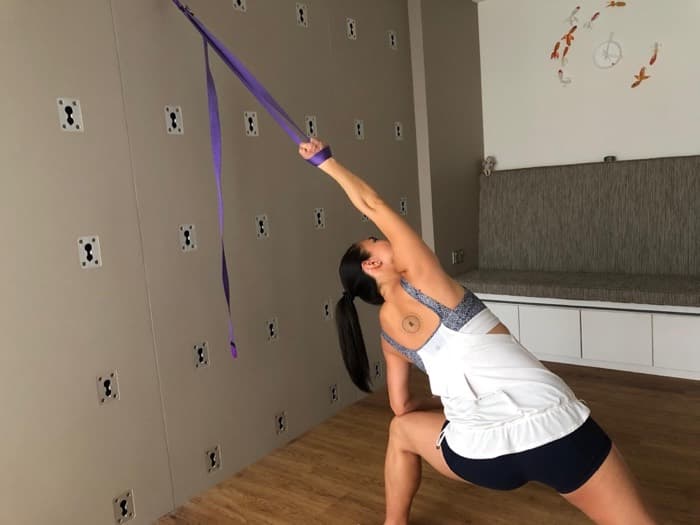
Wall rope yoga uses a set of ropes anchored to the wall to hold part of your body weight while you practise. It is often called the yoga wall or rope wall, and it comes out of the Iyengar tradition, where props are used to make a posture accessible rather than to make it easier.
The distinction matters. The ropes are not there so you can avoid effort — they are there so the effort goes where it should. Held at the hips, the ropes take the compressive load out of the lower spine. Held at the hands or feet, they let you find length in a shoulder or hamstring that would otherwise grip and protect itself.
What the ropes actually do
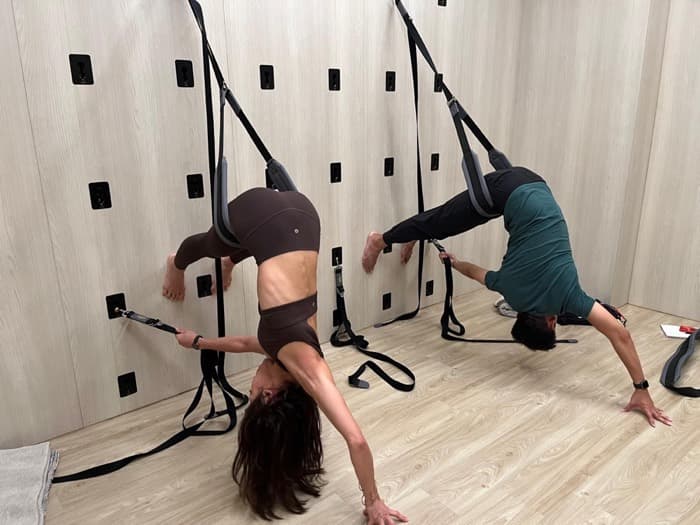
- Traction. Hanging from the ropes creates space between the vertebrae. For anyone who spends the day compressed into a chair, that decompression is often the first thing they notice.
- Support in inversions. Going upside down is useful and, for many people, intimidating or simply not safe unsupported. The ropes give you the benefit without the load on neck and shoulders.
- Access to shape. A backbend or a forward fold that your body refuses to find on its own often becomes available when something else is holding you. Once the body has felt the shape, it learns it faster.
- Feedback. The ropes are unambiguous. If you are pulling unevenly, you feel it immediately — which makes long-standing asymmetries much easier to correct.
Who it tends to help
Desk workers with tight hips and compressed lower backs. People who find floor-based yoga hard on the wrists or knees. Anyone rebuilding confidence after an injury, where the ropes provide a safety margin that makes movement possible again. Stiffer bodies generally, and people who have been told they are “not flexible enough for yoga” — which is rather like being too dirty to take a bath.
It also suits experienced practitioners. The ropes reveal things a strong practice can hide, because you cannot muscle your way through a shape when something else is taking the weight.
Trying it
Wall rope work is taught as part of a private yoga lesson, usually alongside mat-based practice rather than instead of it. How much rope work a session involves depends entirely on what your body needs that day.
No experience is required, and no particular flexibility. If you can stand up and hold on, the ropes will meet you where you are.
Try the yoga wall
If you are curious whether rope work would suit you, describe what is going on in your body and Charmaine will tell you honestly whether it is the right tool.